
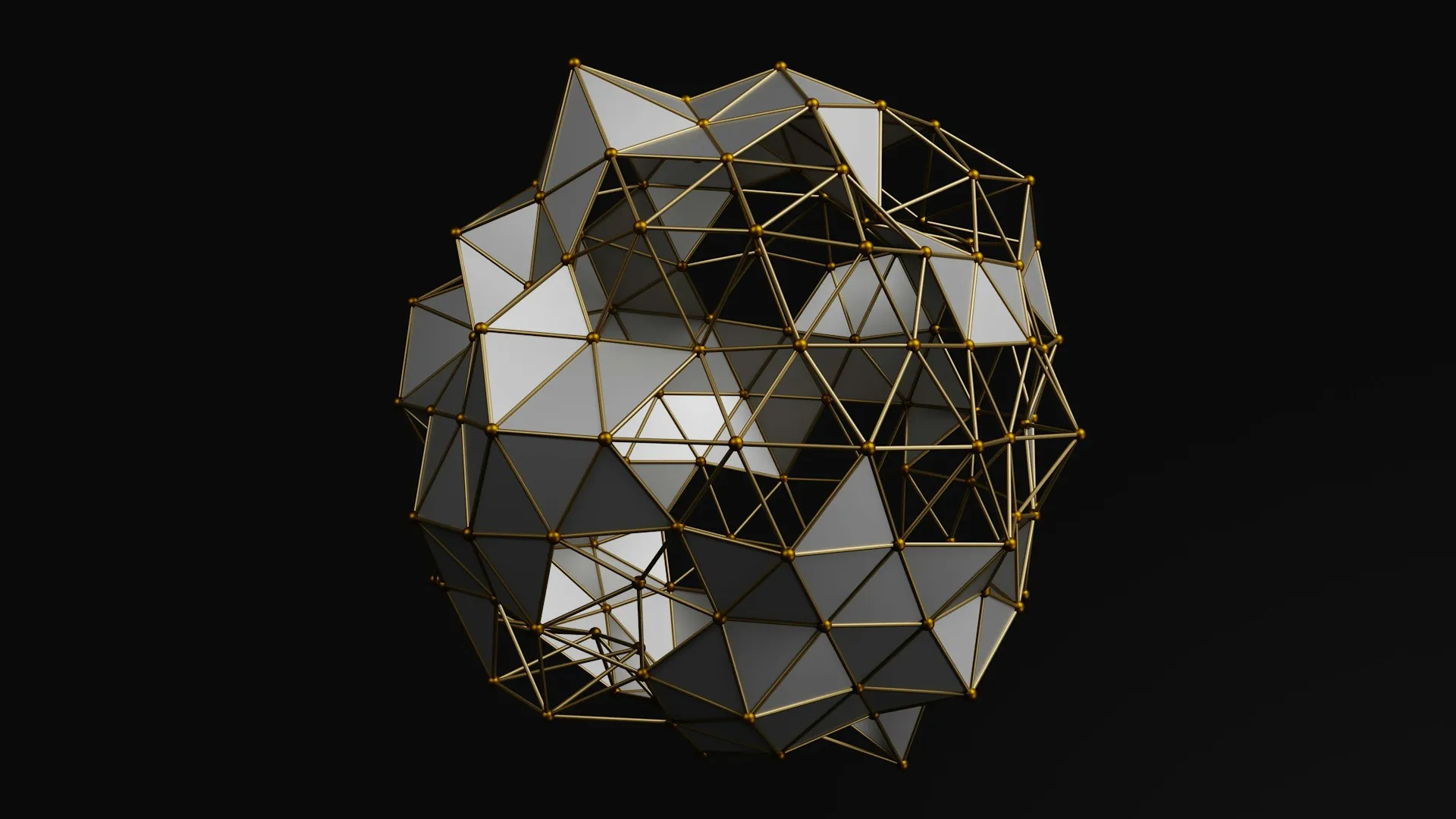
Three-dimensional content creation has a problem that text and image generation do not share: the output must be physically coherent in multiple dimensions simultaneously. An AI image generation model that produces an anatomically improbable hand in a photograph is an inconvenience. An AI 3D model that produces geometry that cannot be cleanly rendered, rigged, or 3D-printed is unusable regardless of how impressive it looks in a screenshot. The difficulty of producing AI-generated 3D assets that are not merely visually plausible but technically usable has been the ceiling that has held back the 3D AI generation market from the kind of adoption curves that image and text generation achieved. Hunyuan3D Polygen is generating attention precisely because it is addressing this ceiling in a way that the previous generation of 3D generation models did not.
What Hunyuan3D polygen is and where it comes from
Hunyuan3D Polygen is a 3D generation model developed by Tencent’s AI research team, built on the Hunyuan model family that the company has been developing across multiple modalities. The “Polygen” designation signals the model’s architectural focus: polygon-based mesh generation, producing 3D assets in the standard polygon mesh format that 3D software pipelines, game engines, and manufacturing workflows actually use.
This is a consequential technical distinction. Many AI 3D generation approaches produce outputs in formats that require extensive conversion and repair before they can be used in production workflows. NeRF-based approaches produce volumetric representations that must be converted to meshes. Point cloud approaches produce geometry that must be reconstructed into clean topology. Implicit surface approaches produce outputs that are mathematically elegant but practically cumbersome to work with in standard 3D software. Polygen’s direct polygon mesh output removes the conversion step, which sounds like a minor implementation detail until you are the 3D artist or engineer who has spent hours fixing the conversion artifacts that alternative approaches produce.
The model can generate 3D objects from text descriptions, from reference images, or from both in combination. The image-conditioned generation capability is particularly relevant for product visualization and design workflows where a 2D reference image exists and the goal is to produce a 3D asset that is faithful to the reference rather than a creative interpretation of a text description.
The technical problem polygen solves
To understand what Hunyuan3D Polygen’s polygon mesh approach delivers, it helps to understand what previous approaches have lacked and why that limitation has practical consequences.
The challenge in AI 3D generation is that three-dimensional geometry carries constraints that two-dimensional generation does not. A polygon mesh that will be used in a game engine must have topology that supports rigging and animation without distortion. A mesh that will be 3D-printed must be watertight, with no holes or intersecting surfaces. A mesh that will appear in a commercial rendering must have UV mapping that allows textures to be applied without visible seams or stretching.
These constraints are the difference between a 3D model that looks good in a viewer and a 3D model that is actually usable in a production pipeline. The AI 3D generation models that preceded Polygen, including Shap-E from OpenAI, Zero123, and various other approaches, produced outputs that were visually impressive but frequently required significant artist time to fix before they could enter production workflows. The fixing time often exceeded the time that direct artist creation would have required, eliminating the productivity case for AI generation.
Polygen’s approach attempts to generate topology that respects these production constraints from the outset, producing meshes with cleaner edge flow, more consistent polygon density, and better UV layout than competing approaches. The technical improvement is meaningful enough that practitioners in the 3D production community who have evaluated the model report substantially reduced repair time compared to alternative generation approaches. “Substantially reduced” is not “zero,” and the model still produces outputs that require artist review and adjustment for demanding production applications. But the reduction is enough to make the productivity case for AI-assisted 3D creation compelling in a way that previous models could not consistently deliver.
The production contexts where it changes the calculation
The 3D content creation market segments into contexts with very different production requirements and different tolerances for AI-generated asset quality. Understanding where Hunyuan3D Polygen changes the productivity calculation requires mapping its capabilities against these segments.
E-commerce product visualization is the segment with the most immediate and largest-scale application. Retailers selling physical products online need 3D visualizations for product pages, augmented reality try-on features, and interactive product viewers. The current production pipeline for these assets typically involves professional 3D artists creating models from product photographs and specifications, at costs and timelines that limit 3D visualization to high-price-point products and major catalog categories. AI generation that can produce usable product models from reference photography at a fraction of the cost and time extends 3D visualization to the long tail of the product catalog where it currently does not exist.
Game asset creation has a different quality threshold and a different workflow context. Game development teams producing large open-world environments, procedural content, or extensive prop libraries face the same fundamental constraint: the volume of 3D assets required exceeds what artist production capacity can efficiently deliver. AI generation tools that reduce the time from concept to production-ready asset, even if they require artist finishing work, change the capacity equation for studios that are currently bottlenecked on asset production.
Industrial design and manufacturing applications have the most demanding technical requirements, and they represent the frontier of what Polygen can currently deliver rather than its core production use case. Generating 3D models from engineering specifications for rapid prototyping, converting 2D technical drawings to 3D representations, and producing visualization assets for products still in development are applications where the productivity gains are large if the model can meet the geometric precision requirements. Current evaluation suggests that Polygen approaches this threshold for concept-stage visualization but does not yet replace precision engineering modeling tools for production manufacturing applications.
Architectural visualization and interior design represent a mid-range application where the quality requirements are high enough to require artist review but not so demanding as to make AI generation economically unviable. The ability to generate furnishing, fixture, and prop assets from reference photographs or descriptions significantly accelerates the visualization workflows that architectural firms use in client presentations and design development.
Where Hunyuan3D polygen sits in the broader 3D ai landscape
The 3D AI generation space is developing rapidly enough that any point-in-time comparison becomes outdated quickly, but the landscape in which Polygen is operating is worth mapping.
Point-E and Shap-E from OpenAI established the credibility of AI 3D generation as a research direction but produced outputs that required extensive post-processing for production use. Stability AI’s TripoSR and related models from the stable diffusion ecosystem have produced competitive results, particularly for object-scale generation from single images. Meshy and Luma AI represent the commercial application layer, building user-facing 3D generation products on underlying models.
Polygen’s positioning is at the intersection of research capability and production usability, with the polygon mesh output architecture as its primary differentiator. The Tencent research backing means ongoing model development at a resource level that smaller teams cannot match, and the Hunyuan family’s multimodal infrastructure provides a foundation for future integration with text and image generation capabilities that could produce more sophisticated conditional generation workflows.
The broader pattern of Chinese AI research labs producing models that are competitive with or exceed Western alternatives in specific capability domains is one that the AI industry has been tracking since DeepSeek’s emergence, examined in our analysis of what DeepSeek’s market impact means for enterprise AI decisions. Hunyuan3D Polygen represents a similar dynamic in the visual AI domain: a Chinese research lab delivering a specific technical capability that Western alternatives have not yet matched.
The workflow integration question
A 3D generation model’s value in production is determined not by its standalone performance but by its integration with the 3D software pipelines that production teams actually use. The key integration question for Hunyuan3D Polygen is how readily its outputs can be imported into and worked with in Blender, Maya, 3ds Max, Cinema 4D, and the Unreal and Unity game engines.
Polygon mesh output in standard formats, including OBJ, FBX, and GLTF, is the foundation of this integration. Polygen’s direct mesh generation approach means the output format question is more straightforward than for generation approaches that require format conversion. The more nuanced integration questions, including polygon count optimization for target platforms, UV layout quality for texture baking, and armature compatibility for rigged character assets, are where the practical workflow evaluation happens.
The connection between AI-generated 3D assets and the broader content production pipeline, including the image generation tools that can produce texture references for 3D models, is an area where the rapid convergence of visual AI capabilities is creating new production workflows. The image generation landscape that provides this surrounding context is examined in AI image generation: the new models everyone is using.
Hunyuan3D Polygen is worth attention because it addresses the specific technical limitation that has prevented AI 3D generation from reaching the production adoption levels that AI image generation has achieved: the gap between visually impressive output and technically usable output. The polygon mesh approach does not eliminate that gap entirely, but it reduces it enough to change the productivity calculation for e-commerce visualization, game asset production, and architectural rendering.
Whether it becomes the reference model for AI 3D generation or is superseded by competing approaches within the next model generation cycle is a question the rapidly moving 3D AI landscape will answer. What is clear now is that it represents the most production-relevant advance in AI 3D generation currently available, and the production teams that evaluate it rigorously rather than waiting for the consensus to form will have a workflow advantage during the period of competitive differentiation.
For the computer vision capabilities that underpin 3D understanding in AI systems, see Computer vision news: the breakthroughs changing ai vision. For the image generation ecosystem that 3D AI generation complements and increasingly integrates with, read AI image generation: the new models everyone is using.
The question Hunyuan3D Polygen poses to every team currently paying artists to produce 3D assets from reference photography: If AI generation could produce a first-pass mesh requiring two hours of artist finishing work rather than ten hours of full creation, how would that change your 3D content capacity without changing your team size?