
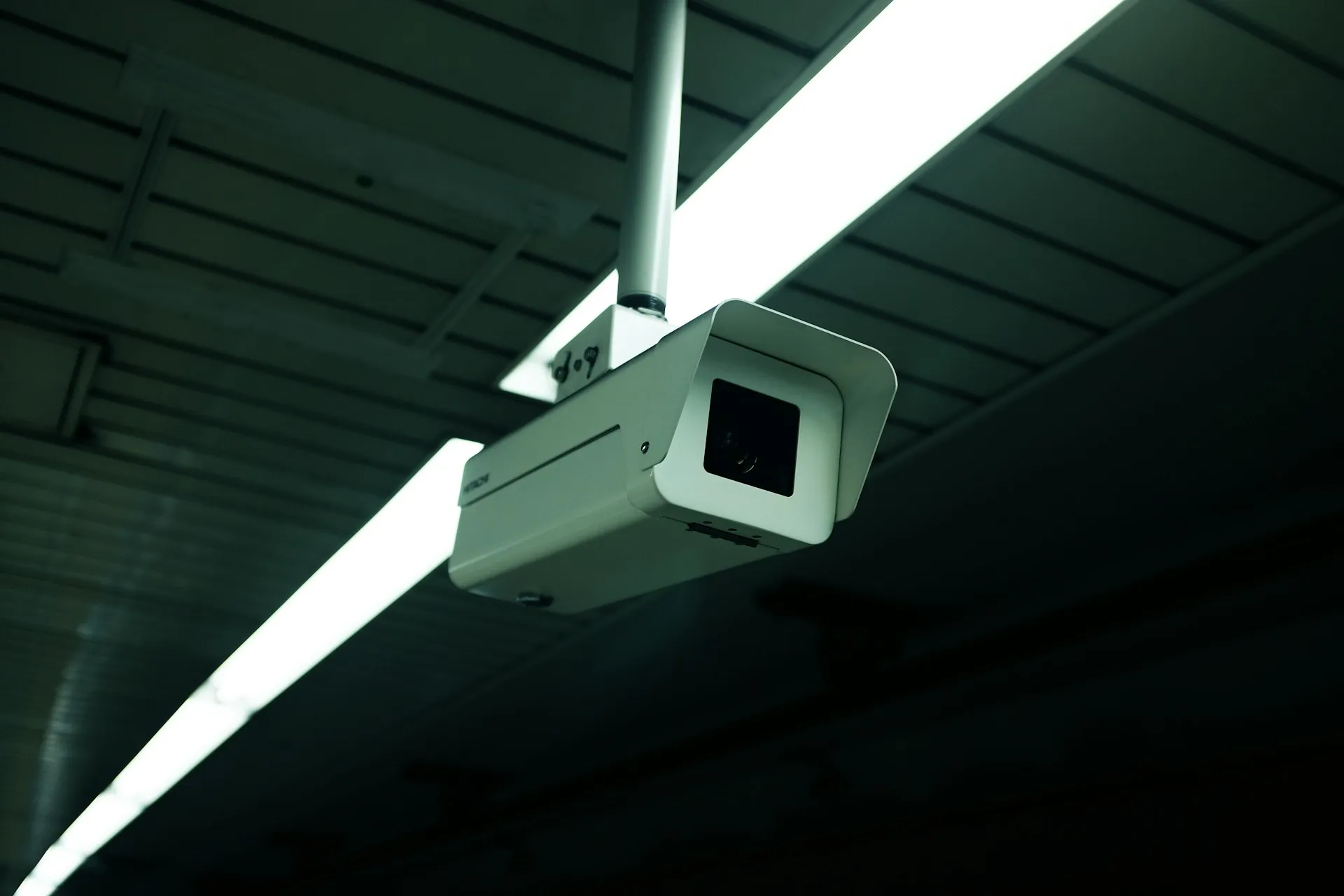
The security camera, as installed in the typical enterprise environment, has not been a passive recording device for several years. The cameras themselves are largely unchanged. What runs against the footage they produce has been transformed by a stack of computer vision models that turn the same physical hardware into a real-time analytics system. The result, in 2026, is an enterprise security category that looks nothing like the badge-and-camera architecture most organizations still believe they are running. The gap between what executives think their surveillance estate is doing and what the underlying systems are actually capable of has become operationally significant.
What AI video surveillance actually does now
The current generation of AI-augmented surveillance combines several capabilities that, until recently, were sold as separate products. Person detection and re-identification, namely the ability to recognize the same individual across multiple cameras and track movement across a facility. Behavior recognition, including the classification of events such as loitering, intrusion, falls, fights, and unauthorized access patterns. License plate recognition at scale, with cross-referencing against permitted lists, watchlists, and patterns of historical presence. Object recognition for assets in inventory, vehicles in logistics yards, and packages in shipping facilities. Anomaly detection, namely the flagging of patterns that deviate from learned baselines without requiring explicit rules.
The combined effect is that an enterprise’s security operations center, or SOC, no longer monitors video feeds. It monitors alerts produced by AI systems running against the video feeds. The shift from human-driven monitoring to AI-flagged exception review is the operational change that has reshaped the entire category. SOC staffing models, alert escalation workflows, and incident response playbooks that were designed around continuous human attention have been overtaken by architectures that assume the human is reviewing pre-classified events rather than scanning raw footage.
The vendors driving the deployment include Axis Communications, Hanwha Vision, Avigilon, Genetec, Milestone Systems, Bosch, Hikvision, and Dahua on the hardware and platform side, with AI specialists such as BriefCam, Eagle Eye Networks, Verkada, Motorola Solutions through Avigilon, and an emerging set of vertical-focused vendors filling the analytics layer. The patterns developing here parallel what we have documented in our computer vision news coverage and the broader AI image generation analysis.
The capabilities most security directors are not yet using
The deployment gap between what these systems can do and what most enterprise security teams have configured them to do is the structural finding worth naming. The cameras have the capability. The platforms support the integration. The organizations have not yet updated their operational procedures to take advantage.
Re-identification across non-overlapping camera fields is one example. A determined intruder moving through a facility can be tracked across dozens of cameras through clothing color, gait, and accessory features even when no single camera has a clear face shot. The capability is reliable in current generation systems. Most enterprise SOCs are not configured to use it because the alert workflows assume single-camera incidents.
Forensic search is another. The ability to query historical video by description, namely “a person in a red jacket carrying a black bag, in any camera, during this 48-hour window,” has moved from research to commercial availability. Most security teams still treat forensic review as a frame-by-frame human effort because the tools were not available when their processes were written.
Behavior pattern learning is the third. The system observes normal patterns of presence and movement and learns what abnormal looks like for the specific facility. A delivery dock that sees the same eight forklifts every morning will flag the appearance of a ninth. A loading bay that closes at 8 PM will flag movement at 11 PM. The configuration overhead is low. The operational discipline to act on the alerts is what most organizations are still building.
What enterprise security directors need to address
The architectural reorientation worth naming is that AI video surveillance has moved from a perimeter control technology to a continuous analytics layer that produces both security and operational intelligence. The directors who treat it as the former are leaving most of the value on the table. The directors who treat it as the latter are running into governance questions that the old framing did not require.
The governance questions are real. Continuous AI-driven analysis of human movement inside a facility produces data that did not previously exist, and which falls under data protection regulation in most major markets. The EU’s General Data Protection Regulation treats facial recognition and biometric tracking as special category data with strict consent requirements. The California Consumer Privacy Act and the patchwork of U.S. state laws impose similar constraints. The patterns developing here are documented in our AI governance hidden risks coverage and our data governance crisis analysis.
The compliance work is rarely a barrier to deployment. It is a barrier to deploying the system the way the security director would prefer to deploy it. The functional, technical, and legal layers all interact, and organizations that have deployed AI surveillance without addressing all three layers tend to discover the gaps during an incident response or, worse, during a regulatory inquiry.
The pattern in adjacent areas of physical security follows the same logic. Asset tracking through video, employee safety monitoring, and the integration of surveillance feeds with access control and incident response systems all require an architectural decision about how AI-derived data is governed across the enterprise. The decision is often made implicitly by the procurement team and only surfaced as a problem when something goes wrong.
A different way to architect the surveillance estate
Rather than treating cameras, AI analytics, alert routing, and incident response as separate procurement decisions, the more useful exercise is to design the entire surveillance stack as a single system with explicit data flows and governance controls. Three principles change the shape of the deployment.
The first is that AI-derived intelligence is treated as an enterprise data asset from the start, with retention, access, and audit controls defined before the system goes live. The default of most surveillance deployments has been to let the platform retain whatever it can, accessible to whoever has SOC credentials, with audit trails that are technically present but rarely reviewed. The exposure compounds over time.
The second is that the alert routing is designed around the actual response capacity of the organization. AI-driven systems produce dramatically more alerts than human-driven monitoring did, and most SOCs are still staffed and configured for the older volume. The result is alert fatigue, false-positive suppression at the operator level, and the gradual erosion of the system’s value. The fix is to prioritize aggressively, route by severity and time-of-day patterns, and accept that not every flagged event requires a human review in the moment.
The third is that the surveillance estate is integrated with the rest of the security and facilities stack rather than operated as a standalone system. The patterns surfacing in our AI security analysis and our enterprise AI governance coverage make clear that point-product deployments produce point-product outcomes. The leverage comes from integration, not from buying the best individual camera.
What the next 24 months will surface
The capability frontier for AI video surveillance is moving fast enough that procurement decisions made today will be operationally outdated within 18 months. The capabilities that are research demos now, namely real-time multi-camera scene reconstruction, language-grounded queries against the full surveillance corpus, and predictive incident detection, will be production features by the end of 2027. The organizations that have established the data governance and operational frameworks to absorb those capabilities will benefit. The organizations that are still running their surveillance estate on rules-based motion alerts will find that the gap is now strategic rather than tactical.
For security directors, the procurement question worth asking is not “which platform is best in 2026.” It is “which platform’s roadmap aligns with the capabilities I will need in 2028.” The vendors who win the next cycle will be those whose architectural decisions today scale into the multi-modal, language-grounded, agent-driven surveillance that the underlying research will deliver. The pattern is the same one playing out in our AI agents coverage and across event tech AI.
The question for security leadership
The AI video surveillance category has crossed a structural threshold. The capabilities are real, the deployments are scaling, and the governance questions are no longer theoretical. The executives who treat surveillance as a hardware procurement decision rather than as an enterprise analytics decision will continue to underspend on configuration, governance, and integration, and they will continue to extract a fraction of the value the systems can produce.
So one question for any security director reviewing the 2026 surveillance budget: if a regulator asked tomorrow how your AI surveillance system is configured, what it retains, who can access its outputs, and how it has been audited, how quickly could you produce a complete answer, and how confident are you that the answer would withstand scrutiny?