
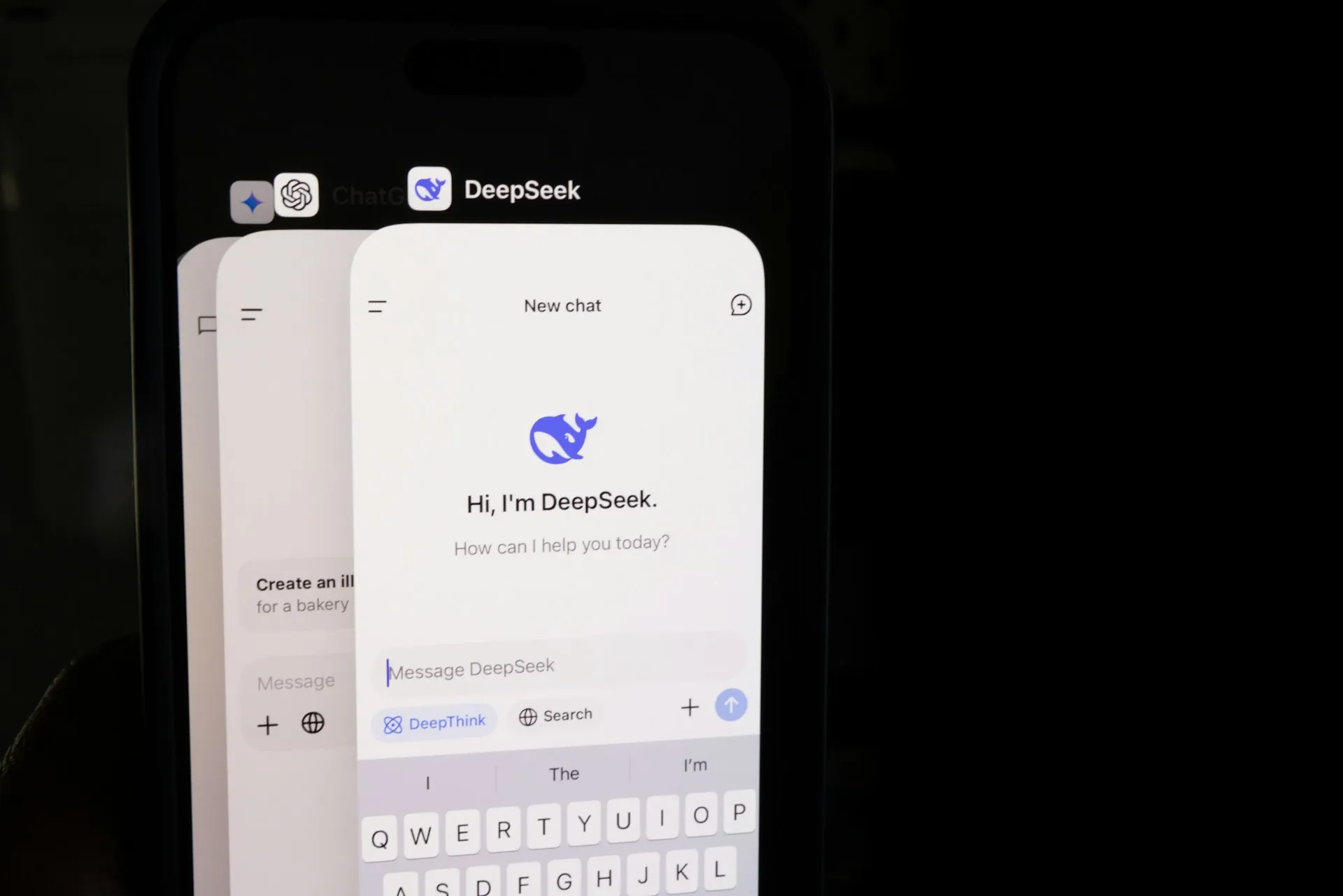
The search query that brought you here is in Chinese, but the story is geopolitical. 华为 means Huawei. DeepSeek, the Chinese AI lab whose R1 reasoning model upended the global AI conversation in January 2025, was reportedly pressured by Chinese authorities to train its successor R2 model on Huawei’s Ascend chips rather than on NVIDIA hardware. The pressure made strategic sense. China is racing to build domestic alternatives to U.S. chip supply, and Ascend processors are the most advanced AI silicon Chinese fabs can currently produce. DeepSeek’s success with R1 made it the natural showcase customer. The execution did not match the strategy. In August 2025, the Financial Times confirmed what had been rumored for months: DeepSeek’s R2 training on Ascend chips had failed repeatedly, even with Huawei engineers on site, and the company had been forced to revert to NVIDIA hardware for training while continuing to use Ascend for inference. The episode is the cleanest data point yet on where the Chinese AI hardware ecosystem actually stands relative to its U.S. competitor.
What actually happened
The sequence of events, reconstructed from Financial Times reporting and corroborating coverage, runs as follows. After DeepSeek’s R1 launched in January 2025 and demonstrated frontier-class reasoning capability at training costs substantially below what U.S. labs had reported, Chinese authorities encouraged DeepSeek to train its next model on domestic hardware. The encouragement reflected national policy priorities around AI chip independence and was reinforced by the strategic value of having a high-profile lab demonstrate the Huawei Ascend platform at frontier scale.
DeepSeek followed the guidance. The R2 training run was attempted on Huawei Ascend chips, primarily the Ascend 910C that powers Huawei’s CloudMatrix rack-scale compute platform. The choice was reasonable on paper. The Ascend 910C, on published specifications, offers more VRAM than NVIDIA’s H20 (the chip currently available to Chinese buyers under export controls) and more than twice the BF16 floating point performance. The performance gap relative to NVIDIA’s frontier products like H100 and Blackwell remains substantial, but Ascend chips were positioned as adequate for training at the scale DeepSeek required.
The training did not work. According to the Financial Times reporting, DeepSeek encountered persistent technical issues across multiple categories. Unstable chip performance under sustained workloads. Slower interconnect speeds than the architecture required. Limitations of the CANN software toolkit that Huawei provides as its CUDA equivalent. Huawei dispatched a team of engineers to DeepSeek’s facilities to address the problems on-site. Even with that level of vendor support, the company failed to complete a successful training run on the Ascend platform.
The fallback was operational. DeepSeek reverted to NVIDIA hardware, reportedly the H20 chips that remain available to Chinese buyers under U.S. export controls, for the R2 training process. Huawei chips were retained for inference, where the workload requirements are less demanding. The mixed approach allowed DeepSeek to complete its training timeline, although the R2 launch was delayed from the originally targeted May 2025 release.
Why the technical issues matter
The specific failure modes deserve attention because they reveal where the gap between Chinese and U.S. AI hardware actually sits. Training a frontier-class model involves distributing computation across thousands of chips, with extensive inter-chip communication, synchronized memory updates, and the accumulated mathematical operations of trillions of token-by-token gradient updates. The system has to work for weeks or months without interruption. If any one component fails, the training run typically has to restart from the last checkpoint, with substantial time and compute costs.
The Ascend 910C’s published specifications make it look competitive on per-chip metrics. The actual training workload requires properties that per-chip benchmarks do not capture. Interconnect bandwidth and latency between chips. Software stack maturity for handling the specific operations that frontier model training requires. Hardware reliability under sustained high-utilization workloads. The CANN software toolkit that Huawei provides as its development environment for Ascend chips is several years behind CUDA’s maturity, with documentation gaps, missing optimizations, and edge cases that frontier training is likely to encounter.
The DeepSeek experience suggests that the Chinese AI hardware ecosystem is approaching adequacy on inference workloads while remaining structurally behind on training workloads. Inference has lower per-chip utilization, shorter run durations, and more tolerance for individual chip failures. Training is the harder problem, and the gap is large enough that even a willing customer like DeepSeek, with vendor engineering support and policy encouragement, could not close it within their R2 development cycle.
The geopolitical context
The DeepSeek episode sits inside a broader geopolitical contest over AI chip supply that has been escalating since the U.S. began tightening export controls in 2022. The current state of play is uncomfortable for both sides. The U.S. has restricted Chinese access to NVIDIA’s most capable chips, including the full H100 and Blackwell lines. China has invested heavily in domestic alternatives, including Huawei’s Ascend line, but has not yet produced silicon competitive with the restricted U.S. options. NVIDIA, the chip company at the center of the contest, continues to ship limited variants like the H20 to Chinese customers, with the U.S. government periodically reviewing whether even those should be permitted.
For DeepSeek specifically, the inability to train on Huawei chips creates a structural dependency on NVIDIA hardware that the export control framework can disrupt. The H20 chips currently available to Chinese buyers are themselves under regular review, and any tightening could leave DeepSeek without a viable training option. The patterns connect with our EU vs US AI regulation coverage and the broader supply-chain dynamics documented across our Anthropic London expansion coverage.
For Huawei, the DeepSeek experience is a setback in their effort to position Ascend as a credible training platform. The technical issues are recoverable, and Huawei continues to invest substantially in the software stack and silicon roadmap. The timeline for closing the gap to NVIDIA’s training capability remains unclear, with most observers projecting at least two to three additional years. Huawei CEO Ren Zhengfei has himself acknowledged publicly that the company’s best chips remain a generation behind U.S. competitors.
For the broader Chinese AI ecosystem, the episode reinforces a strategic uncertainty. Chinese labs producing strong open-weight models, including DeepSeek, Alibaba’s Qwen series covered in our Qwen QwQ analysis, Tencent’s Hunyuan family, and Ant Group’s Ling-1T documented in our Ling-1T coverage, have been able to produce frontier-competitive capabilities while operating under chip constraints. The question is whether the gap remains manageable as U.S. labs scale further on hardware Chinese labs cannot access. The patterns connect with our DeepSeek explainer and the broader State of LLMs 2025 coverage.
What enterprises should take from this
The architectural reorientation worth naming is that the geopolitical and hardware-supply dynamics underneath the AI category have become an operational consideration for enterprise procurement, not a background concern. Organizations building production AI workloads on open-weight Chinese models now have to factor in the supply-chain volatility that affects the labs producing those models. Organizations building on closed-API U.S. models have to factor in the regulatory volatility that affects cross-border deployment. Neither category is structurally simple anymore.
The procurement patterns visible in 2026 reflect the complexity. Organizations subject to European or U.K. regulatory frameworks increasingly find Chinese open-weight models more straightforward to deploy than U.S. closed APIs, because the data flow constraints under GDPR and adjacent regulations are easier to satisfy with on-premises open-weight deployment. Organizations with U.S. federal customers or defense exposure increasingly avoid Chinese open-weight models due to supply-chain risk designations and the policy environment documented in our Trump AI speech analysis. Organizations without strong geopolitical exposure on either side continue to mix sources opportunistically.
The patterns surfacing here connect with our agentic AI report, the LLM new models analysis, and the procurement realism documented across our Anthropic and responsible AI coverage.
What the next 24 months will resolve
The Chinese AI hardware story has two trajectories that will resolve over the next 18 to 24 months. The optimistic trajectory has Huawei closing the software and reliability gap on Ascend, allowing major Chinese labs to train on domestic hardware at scale. The pessimistic trajectory has Chinese labs continuing to depend on NVIDIA’s restricted product line, with the supply remaining vulnerable to additional export control tightening. The most likely outcome is a middle path: incremental Ascend improvement, continued partial reliance on NVIDIA for the most demanding training workloads, and the gradual maturation of inference-grade Chinese silicon that absorbs a growing share of production AI compute.
For executives whose AI strategy depends on either Chinese open-weight models or U.S. closed-API alternatives, the geopolitical and hardware dynamics deserve continuous monitoring. The procurement decisions made on current assumptions may need to be revisited as the underlying supply landscape shifts.
So one question for any AI architecture leader whose strategic plan assumes stable AI hardware supply through 2027: if the chips powering your preferred model layer became unavailable or restricted in the next 12 months, what would your migration path look like, and how much of your current capability would survive the transition?